(Published as an article in Sushashan 2082 by Office of Chief Minister and Council of Minister, Karnali Province)
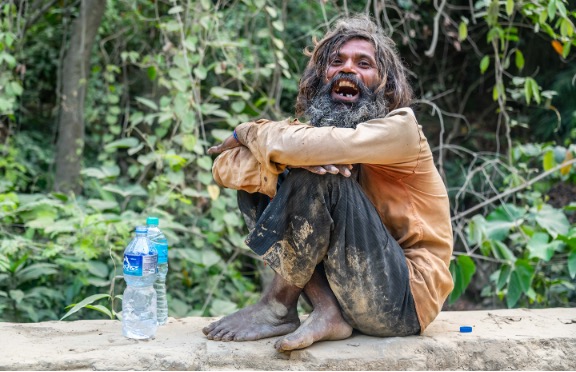
Figure 1: Person in Need of Assistance on the Streets (Source: Manavsewa Ashram)
Nepal’s laws recognize the rights and dignity of people living on the streets—but the country still needs a clear, humane way to identify who truly needs assistance and how to support them. This blog explains the idea of a “person in need of assistance” (वास्तविक सहयोगापेक्षी), what the Constitution promises, the indicators for a street-homeless-free Nepal, and how Manavsewa Ashram is acting on it.
Why this matters
In public conversation, “homelessness” is often reduced to “no roof.” But lived reality is multi-dimensional physical, mental, legal, social, and even spiritual. If we only build structures of brick and cement, we miss the person. Lasting change needs compassionate identification, tailored services, and long-term reintegration.
What does “real person in need of assistance” mean?
Not just roofless, but resource-less across dimensions. A person in need of assistance may be:
· Street-dependent: sleeping in open/public places without secure shelter or private space.
· Shelter-shifting: cycling through night shelters or temporary huts.
· Institution-bound or transient: hospitals, prisons, children’s homes, transition housing.
· Legally invisible: lacking citizenship/ID, unable to access services.
· At heightened risk: women and children in distress, elders, persons with disabilities, people with mental-health or substance-use disorders, people abandoned or trapped at home.
This lens helps target support to those who cannot care for themselves and have no caregiver—the core ethical test for urgent intervention.
What Nepal’s Constitution guarantees (for everyone, including street-dependent people)
· Dignified life (Art. 16) → safe shelter, food, health, pathways to restoration.
· Freedom (Art. 17) → humane management that respects personal liberty.
· Equality (Art. 18) → no discrimination in access to services.
· Social justice (Art. 42) → targeted support, family reunification.
· Health (Art. 35) and Food (Art. 36) → basic health, nutrition, detox and mental-health care.
· Housing (Art. 37) → secure accommodation, not just temporary relief.
· Employment (Art. 33) → skills, jobs, and income to sustain dignity.
· Child (Art. 39), Women (Art. 38), Senior citizens (Art. 41) → special protection.
· Justice (Art. 20), Clean environment (Art. 30) → safety, sanitation, legal aid.
Annual government policies also set a national intent: build a street-homeless-free Nepal through rescue, humane management, and dignified aging.
The indicators that actually change lives
To move from intent to impact, systems must track and deliver across eight areas:
· Policy & institutions: clear laws, annual plans, and strong implementing bodies.
· Data & demographics: who, where, age/sex/disability, mental-health status—kept current.
· Rescue & reintegration: more people safely rescued, housed, reunited—with lower relapse.
· Health & psychosocial care: accessible medical services, detox, counseling, sanitation, nutrition.
· Jobs & skills: training, livelihoods, and job retention support after reintegration.
· Legal identity & rights: citizenship/IDs, legal assistance, grievance redress.
· Community & prevention: awareness, local partnerships, and early-risk interventions.
· Finance & monitoring: predictable budgets, PPPs, donor leverage, and outcome tracking.
What Manavsewa Ashram is doing
Since 2012 (2069 B.S.), MSA has worked to ensure no one is forced to live—and suffer—on the streets. With 26 service centers across 20 districts in all 7 provinces, our teams have:
· Rescued and reunited more than 11,456 people with families and communities.
· Provided ongoing care to 1,792 individuals (current residents across centers).
· Partnered with all three tiers of government and civil society on a nationwide Humanity Promotion Campaign.
Our approach follows the indicators above—rescue → treat → care → skill → reunite → follow-up—so people can stay off the streets and rebuild their lives.
What needs to happen next
· Clarify national definitions of “real person in need of assistance” to focus resources.
· Standardize rescue, case-management, and reintegration protocols across provinces.
· Strengthen mental-health and addiction services within the street-homeless response.
· Guarantee IDs and legal aid for service access.
· Fund and measure outcomes—especially family reunification and relapse reduction.
How you can help
· Refer anyone in crisis to your nearest MSA center.
· Volunteer or partner (skills training, health camps, jobs).
· Support a rescue kit, a medical assessment, or a reunification journey.
Human dignity is not optional. With clear definitions, constitutional backing, and coordinated action, a street-homeless-free Nepal is achievable within our lifetimes.